Click or tap an intersection for more information, or use Enter or Space when focused. Scroll across the matrix to explore all six practice domains.
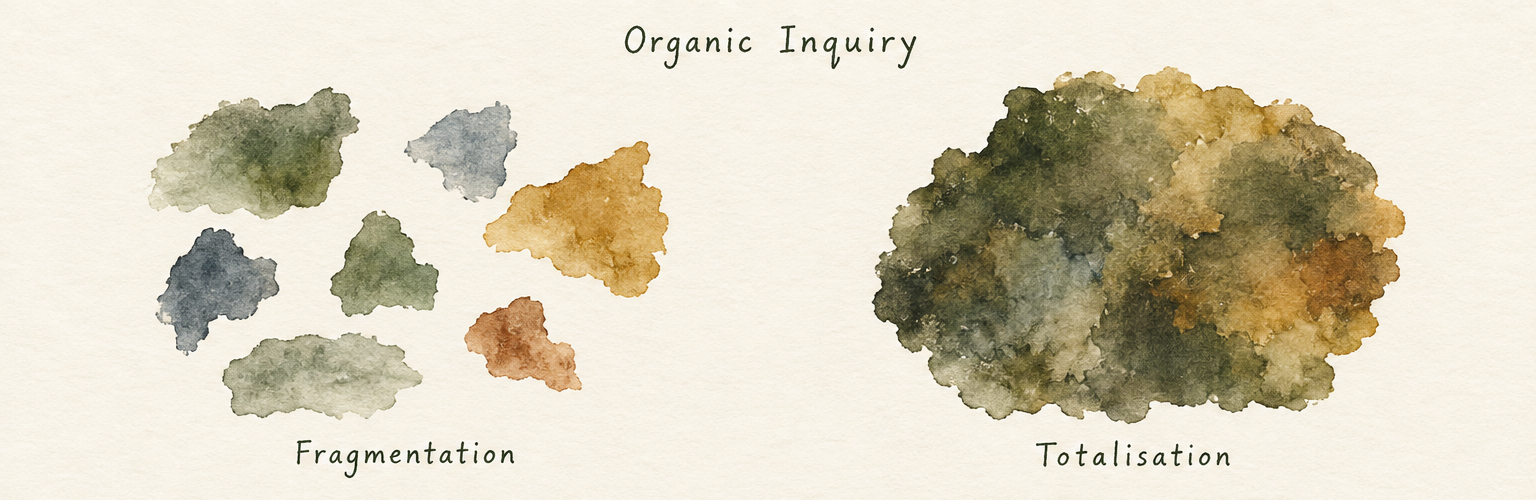
Organic Inquiry · Learning Methods
We learn together across modes. We organise our learning around lived situations, moving between study, embodied practice, contemplation, creative making, land work, and reflection.
Organic Inquiry · Human Relationships
We meet across our differences. We bring our different experiences, cultures, and ways of seeing into conversation, allowing our perspectives to inform and challenge one another. We remain curious without requiring agreement, personal disclosure, or complete understanding of one another.
Organic Inquiry · Ecology
We engage with the land through our different bodies. We bring different ways of sensing, moving, thinking, and attending into relationship with the land. Study, cultivation, creative making, and contemplation allow these encounters to inform one another, without requiring a single way of experiencing or understanding the land.
Organic Inquiry · Governance
We make decisions using different ways of knowing. We bring cognitive, emotional, spiritual, and ecological considerations into our decisions. Thought and analysis, emotional awareness, spiritual reflection, and attention to our relationships with the living world inform and challenge one another, helping us notice what any single way of knowing might overlook.
Organic Inquiry · Economy
We resource different forms of inquiry. We allocate money, time, space, and materials across intellectual, embodied, creative, contemplative, and ecological forms of inquiry. We do not require each mode to justify itself through income or measurable output, while keeping the School’s overall commitments financially sustainable.
Organic Inquiry · Work Organisation
We step beyond our roles to learn. We keep clear responsibilities while creating opportunities to cross role boundaries for learning: shadowing, helping, trying unfamiliar tasks, and understanding how other parts of the School work. Roles coordinate responsibility without becoming fixed limits on curiosity or development.
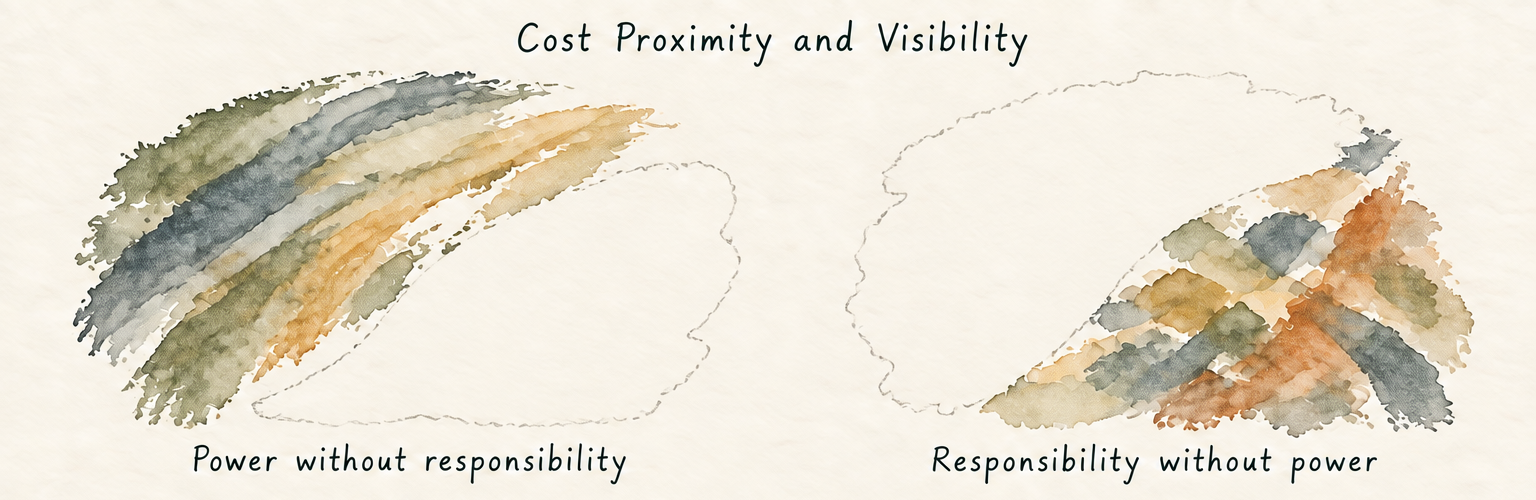
Cost Proximity and Visibility · Learning Methods
We learn by tracing the costs of our actions. Through experience, investigation, and reflection, we explore who and what bears the costs of what we do, including consequences that unfold elsewhere or later. We bring these consequences into our learning and choices, connecting responsibility to our capacity to act rather than asking anyone to carry every problem they become aware of.
Cost Proximity and Visibility · Human Relationships
We attend to the costs we place on one another. We notice when our choices require someone else to absorb extra time, care, emotional labour, inconvenience, or sacrifice. We try to acknowledge and redistribute those burdens rather than allowing them to fall repeatedly on the people least able to refuse them.
Cost Proximity and Visibility · Ecology
We take responsibility for our ecological costs. We anticipate the ecological costs of our choices and consider them before deciding what to purchase, build, or do on the land. We trace the water, energy, food, and materials we use and the waste we produce, including effects beyond the campus and into the future, and adapt our practices in response to prevent and reduce harm.
Cost Proximity and Visibility · Governance
We involve those who bear the consequences. Before making consequential decisions, we identify who is likely to carry their costs and give those people meaningful ways to influence the choice. Decision-making should bring consequences closer to those with the power to create or prevent them.
Cost Proximity and Visibility · Economy
We budget for costs and reparation. We look beyond immediate prices to consider costs displaced onto other people, places, or the future. We allocate resources for prevention, upkeep, and reparation where harm occurs, while recognising that some harms require changing or declining an activity rather than simply paying for its consequences.
Cost Proximity and Visibility · Work Organisation
We account for the work behind the work. We recognise the preparation, coordination, care, maintenance, and recovery that visible work depends on. We plan commitments with those less visible demands in mind so that delivery does not rely on someone else absorbing the hidden costs through overwork.
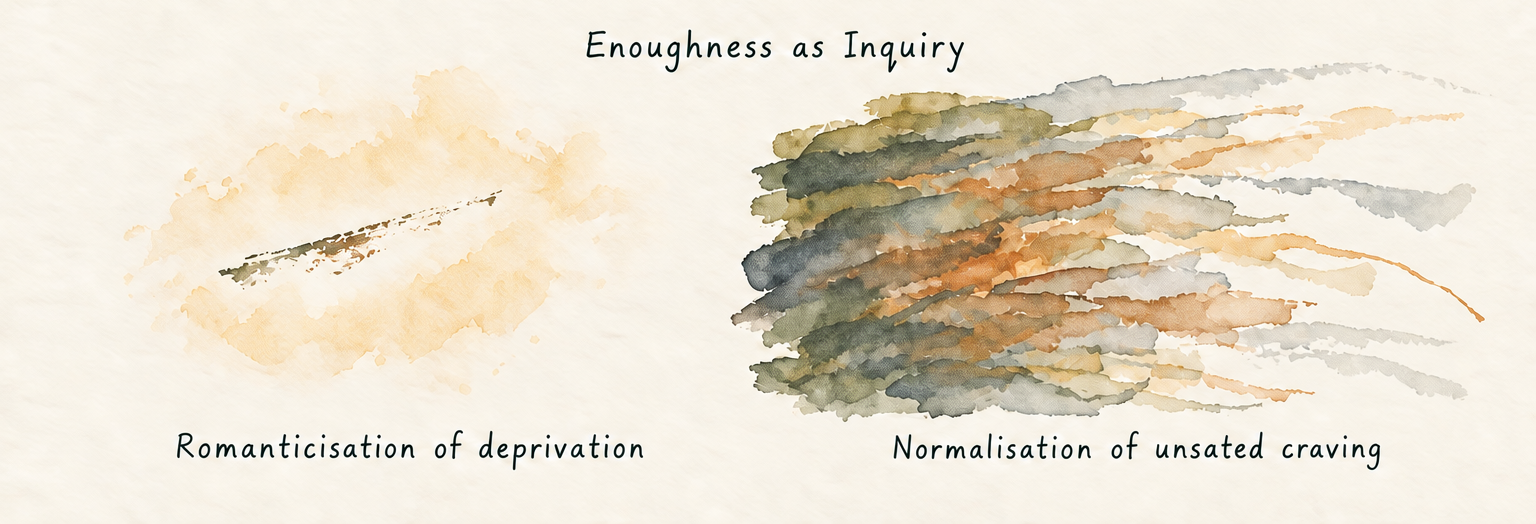
Enoughness as Inquiry · Learning Methods
We use enoughness as a method. We vary pace, routines, opportunities for consumption, and access to shared resources, then reflect on how these conditions shape what we want and what feels sufficient. We make room for different needs and aspirations, without prescribing what anyone should renounce or treating deprivation as a lesson.
Enoughness as Inquiry · Human Relationships
We allow relationships to be. We make room for relationships to have different depths, rhythms, and places in our lives, without expecting every connection to become closer, more intense, or more useful. We value what is already present while remaining attentive to one another’s needs and open to change.
Enoughness as Inquiry · Ecology
We let the land pause and regenerate. We reduce or suspend use where the land needs recovery, adapting cultivation, access, and extraction to what ecosystems can sustain. Enoughness here means accepting that not every space or resource needs to remain continuously productive for us.
Enoughness as Inquiry · Governance
We keep governance light enough to act. We keep meetings and procedures proportionate to what is being decided, delegate routine choices, and agree when discussion should lead to action. Decisions with greater consequences receive more time and participation, without making every practical choice depend on prolonged collective deliberation.
Enoughness as Inquiry · Economy
We balance wants and needs. We distinguish what the School needs to function well from what we would simply like to have, while recognising that both needs and wants can change over time. We use purchasing as an opportunity to ask what is sufficient, what genuinely adds value, and when acquiring more would mainly reproduce the impulse to accumulate.
Enoughness as Inquiry · Work Organisation
We work at a sustainable pace. We set workloads and expectations that leave room for rest, maintenance, learning, and life beyond work. When commitments repeatedly exceed available capacity, we reduce scope, slow the pace, or add support rather than normalising overwork.
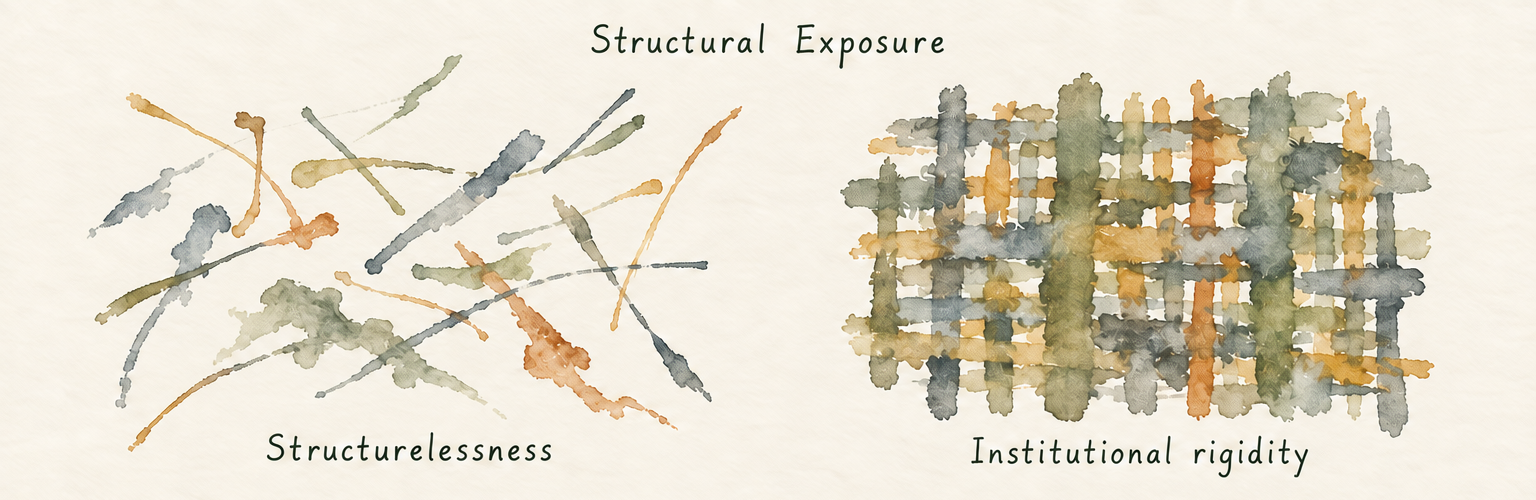
Structural Exposure · Learning Methods
We make the learning process visible. We explain why a practice is present, what role facilitators hold, what participation involves, and how reflection and interpretation are being invited. We make the process open to question and revision without requiring every aspect of learning to remain permanently negotiable.
Structural Exposure · Human Relationships
We make relational expectations explicit. We make norms around participation, care, availability, intimacy, conflict, and boundaries discussable rather than leaving them implicit. People can question or decline expectations without having their resistance interpreted for them, while shared responsibilities remain clear enough for relationships to function.
Structural Exposure · Ecology
We make the systems that sustain us visible. We pay attention to where water, food, energy, materials, and waste come from and where they go, making the infrastructures and ecological relationships behind everyday life easier to see. Visibility helps us question and revise arrangements that would otherwise disappear into routine.
Structural Exposure · Governance
We make power and decision-making visible. We make clear who can decide what, how authority is assigned, where informal influence operates, and how decisions can be questioned or reviewed. Visibility does not mean everyone decides everything; it means power should not disappear behind ambiguity, custom, or personality.
Structural Exposure · Economy
We make our economy legible. We make clear where resources come from, how money moves, what financial commitments the School carries, and which dependencies shape its choices. Economic arrangements should be understandable enough to question and revise, while protecting personal information that does not need to be shared.
Structural Exposure · Work Organisation
We make how work is organised visible. We make roles, responsibilities, coordination, decision routes, and expectations clear enough for people to understand how work gets done and where responsibility sits. These arrangements remain open to question and revision rather than becoming invisible habits or informal hierarchies.
Liberative Power · Learning Methods
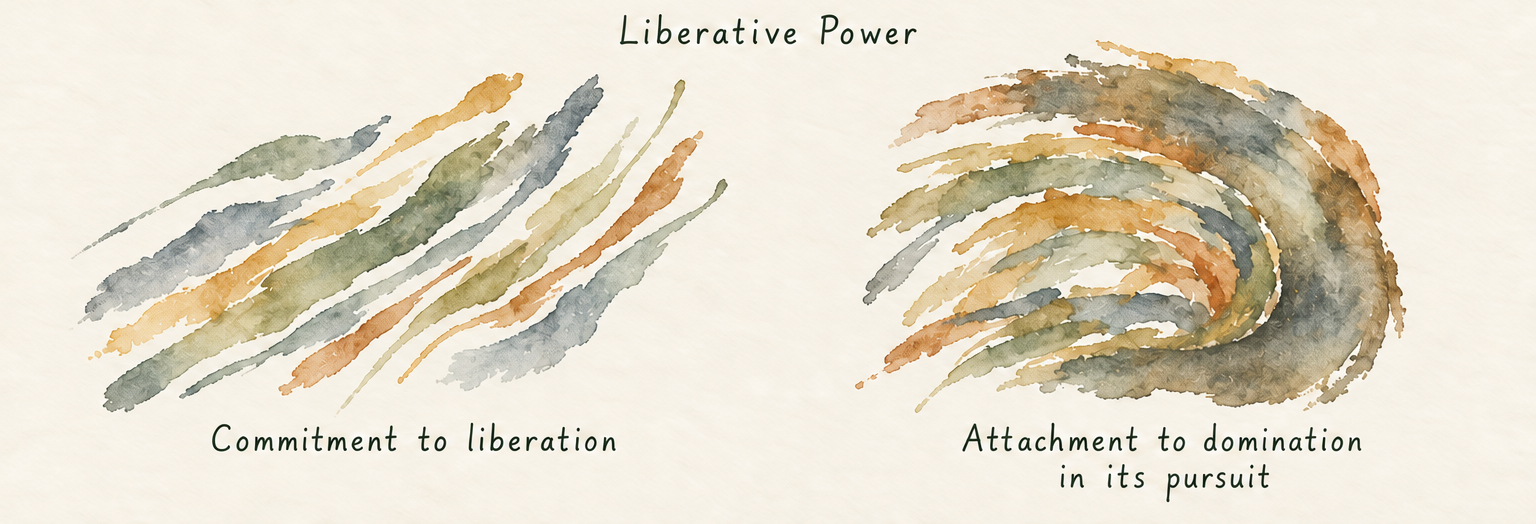
We all learn. No role places someone outside the learning process. Facilitators may bring greater experience, knowledge, or responsibility, but they remain open to questioning, correction, and learning from participants. Authority can structure learning without making anyone the sole source of knowledge or meaning.
Liberative Power · Human Relationships
We offer mirrors, not directions. We reflect what we notice, ask questions, and offer perspectives that may help one another see more clearly. We can challenge and influence without claiming authority over another person’s choices, interpretation, or direction.
Liberative Power · Ecology
We use our power to help life flourish. We recognise that cultivating, building, restoring, and managing land all exercise human power. We try to use that capacity to support ecological flourishing rather than impose control for our purposes alone, while remaining humble about what we cannot predict or manage.
Liberative Power · Governance
We use power with responsibility. Those who hold authority remain accountable for how they use it and for its effects on others. We aim to exercise power in ways that protect agency, make challenge possible, and enlarge others’ capacity to act rather than merely secure compliance.
Liberative Power · Economy
We respect money as a means, not an end. We recognise that money creates real power: it can open possibilities, set conditions, and create dependence. We use it to support people and purposes without allowing financial leverage to purchase obedience, silence disagreement, or determine the School’s direction.
Liberative Power · Work Organisation
We organise work around needs, capabilities, and desire. We distribute and adapt work in relation to what needs doing, what people can contribute, and what they are drawn to develop or take responsibility for. Roles provide coordination without fixing people permanently into functions that ignore their capacities, limits, or aspirations.
Interdependent Autonomy · Learning Methods
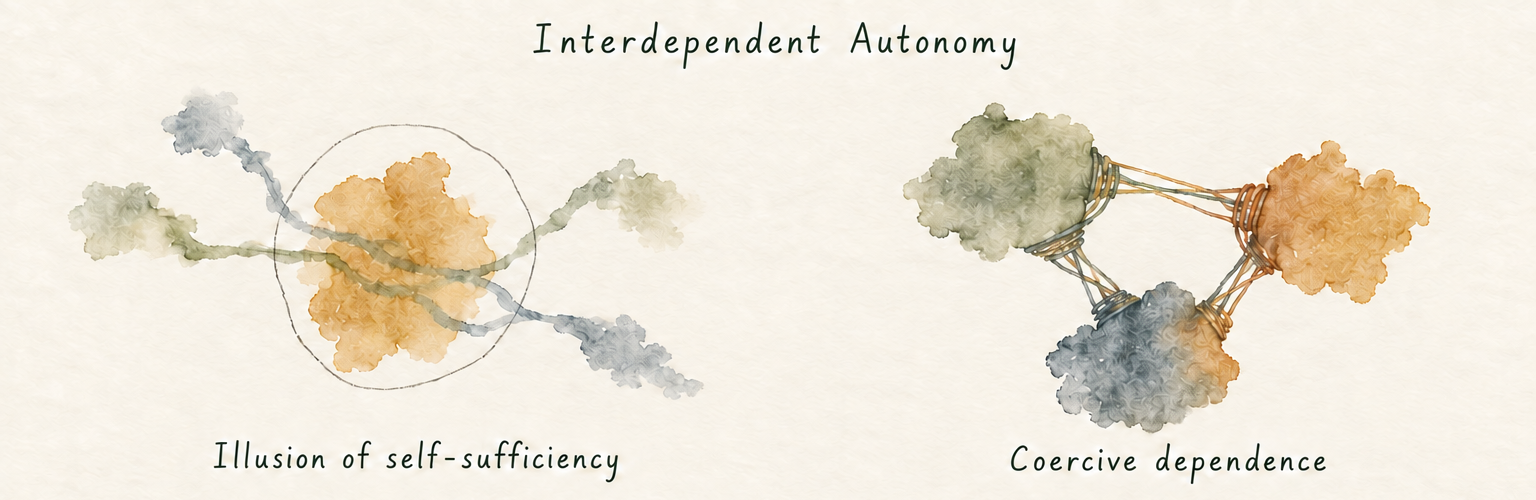
We believe there is a teaching in everything. We learn through our encounters with people, land, work, conflict, solitude, study, failure, and ordinary life. These encounters shape us, but they do not determine what they must mean: we remain free to interpret, question, integrate, or refuse the lessons we draw from them.
Interdependent Autonomy · Human Relationships
We depend on one another without owning one another. We build relationships in which care, support, and reliance can be given and received without turning dependence into control or belonging into obligation. People can ask for help, set boundaries, say no, leave, and remain different while recognising that none of us is self-sufficient.
Interdependent Autonomy · Ecology
We exchange with the land. We understand our relationship with the land as reciprocal: we draw food, water, shelter, beauty, and knowledge from it while contributing care, cultivation, restoration, and restraint in return. Our autonomy grows through learning how to participate in these exchanges rather than imagining independence from them.
Interdependent Autonomy · Governance
We participate in creating the systems that shape us. We take part in shaping the rules, roles, and decision-making structures that organise our shared life. Participation gives us influence without requiring constant consensus, while preserving the ability to question, challenge, and revise the systems we help create.
Interdependent Autonomy · Economy
We value different forms of contribution in sustaining one another. We recognise that value is created through many forms of contribution, not only through paid employment or market income. Care, maintenance, teaching, food growing, organising, creative work, and other forms of support all help sustain shared life, and our economic arrangements should recognise these differences without reducing people’s worth to productivity.
Interdependent Autonomy · Work Organisation
We work independently, never alone. We give people real ownership of their responsibilities while ensuring they can draw on others, shared systems, and collective support when needed. Autonomy means having room to exercise judgement and initiative, not being left to carry work alone.
Relational Abundance · Learning Methods
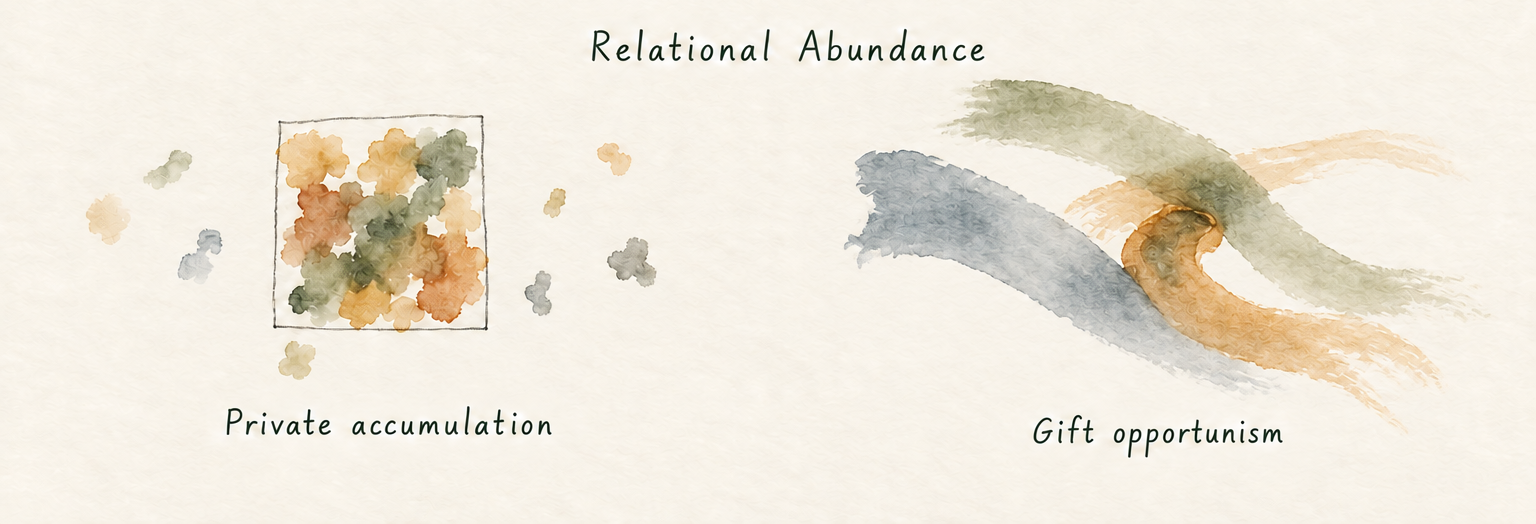
We grow wisdom by sharing what we learn. We bring lived experience, reflection, practice, study, and different ways of understanding into conversation. By sharing what each of us is learning, individual insight can become part of a wider collective wisdom, without making personal disclosure a requirement.
Relational Abundance · Human Relationships
We make room for giving and receiving. We allow care, attention, knowledge, hospitality, practical help, and opportunity to circulate between us in ways that can create more connection and possibility. Giving does not create entitlement, receiving does not create debt, and generosity remains compatible with boundaries and the freedom to say no.
Relational Abundance · Ecology
We cultivate abundance through diversity. We support ecological diversity because relationships between species, soils, water, crops, habitats, and people can generate forms of resilience and fertility that no element could create alone. We favour systems in which difference, interconnection, and cycling resources strengthen the whole.
Relational Abundance · Governance
We share authority to multiply contribution. We distribute authority where doing so allows more knowledge, initiative, and capacity to enter collective decisions. Sharing power is not an end in itself: it should create more possibilities for people to contribute while keeping responsibility and decision rights clear.
Relational Abundance · Economy
We create wealth by circulating resources. We use money, space, tools, knowledge, and access in ways that help resources move where they can generate further value and possibility. We favour forms of exchange that strengthen shared capacity rather than allowing resources to accumulate without contributing to the wider life of the School.
Relational Abundance · Work Organisation
We organise work to multiply capacity and joy. We organise roles so skills, knowledge, tools, support, and opportunities can circulate between people. Collaboration, play, humour, and mutual learning can make work more generative and enjoyable, while ensuring that enthusiasm does not become an expectation of unlimited availability or invisible labour.
Intimacy with the Wild · Learning Methods
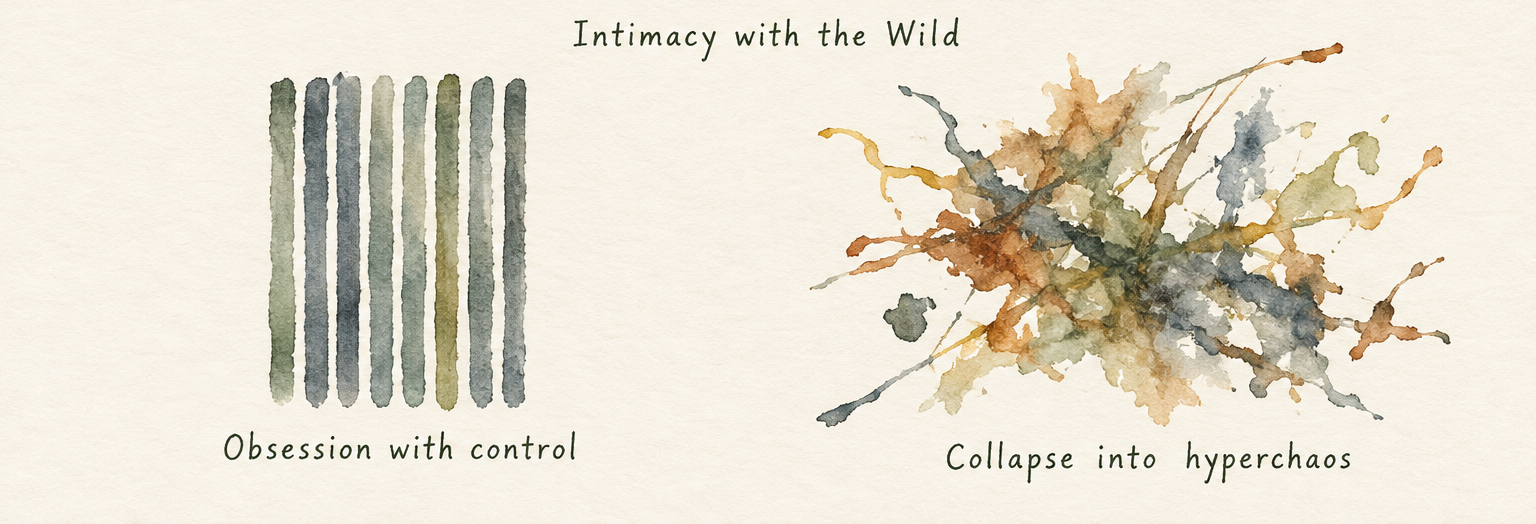
We learn from what we cannot control. We make room for encounters whose outcomes cannot be fully planned in advance: with land, weather, other beings, uncertainty, failure, and our own responses. Reflection helps us learn from what emerges without forcing every experience into a predetermined lesson.
Intimacy with the Wild · Human Relationships
We leave room for surprise in one another. We resist believing we can fully know, explain, or predict another person. Relationships remain open to contradiction, change, and aspects of one another that exceed our existing stories, while respecting that mystery is not an invitation to ignore boundaries or accountability.
Intimacy with the Wild · Ecology
We leave room for the land to be wild. We do not try to organise every part of the land around human use, beauty, or productivity. We protect spaces and processes that can unfold on their own terms, intervening where care is needed while accepting uncertainty, mess, succession, and forms of life we did not design.
Intimacy with the Wild · Governance
We leave room for emergence. We create enough structure to coordinate and protect what matters while leaving space for situations, ideas, and relationships we could not fully anticipate. Governance can adapt as new realities appear, without treating unpredictability as a failure of planning.
Intimacy with the Wild · Economy
We keep resources available for the unexpected. We leave some financial and material capacity uncommitted so we can respond to events, needs, and opportunities that could not reasonably have been planned in advance. Reserves give uncertainty room without turning unpredictability into either recklessness or paralysis.
Intimacy with the Wild · Work Organisation
We let plans bend to reality. We keep enough flexibility in roles, schedules, and priorities to respond when conditions change, unexpected needs appear, or new possibilities open. Commitments still matter, but plans remain tools rather than constraints we follow after they stop fitting what is actually happening.